Posted in authors, book editor, Books, indie authors, publishers, self-editing, writing

Character Actions: The Building Blocks for Emotional Complexity

Every action has a purpose

1. To create suspense

Otis did not back down. He stepped forward, a twig cracking under his shoe. A cricket chirped. He aimed the gun at Nicolas. Sweat trickled down Otis’s forehead, burning his eyes. Otis clicked the trigger.

Previously, this paragraph began with the sentence, “Otis clicked the trigger.” None of the sentences building up to this moment were there, and with no buildup, there’s no suspense.

2. To emphasize a point made in dialogue

Ed lunged at Otis, snatching the gun from his hand.

“Gotcha!” he said, mirthfully waving the gun. “Now we have knives and a gun. And we’re bigger.” He flexed his bicep. “Guess who’s gonna win.”

Although flexing is a pretty obvious display of someone’s strength and size, the action highlights Ed’s obnoxiousness and leads readers to dislike him even more.

3. To add tension between a character’s words and emotions

“Not even how you used to spend your Friday nights?” The hint of a smile formed in the corners of Mrs. Thompkin’s lips.

“I don’t know what you’re talking about,” Shelly said, rubbing the back of her neck.

Although Shelly claims innocence, her nervous gesture implies that she’s hiding something.

Picture the scene as a movie in your mind

When you’re writing a scene, you’re painting a picture for the reader. Before you can accomplish this, though, the picture must be clear in your own mind.

Imagine each scene playing out in your head. Visualize the setting. Where would the character be standing right now? Where is he in relation to the other characters? Are they crammed together in a tiny room, or are they scattered about in an auditorium?

Thinking about scenes in these terms help to simplify the process of creating more believable characters and situations.

Revealing a character’s emotions through action need not be viewed as some mystical process but can be as simple as checking items off a list:

•What are others’ perceptions of this character?

•What is the character thinking and feeling?

•How is the character interacting with his/her space?

•What is the character physically doing (or not doing) at this moment?

•How are others reacting to this character’s words and behavior?

•How is the character trying to hide his/her emotions?

Conclusion

“Show don’t tell” is a rule we’ve all heard a million times and grasp intuitively, but it can be hard to pull off, especially in longer works where we’re juggling plot, dialogue, etc.

Luckily, just as the five senses can be utilized to create more dynamic descriptions, character actions are the building blocks for richer characters with complex emotions. Although the process of developing these characters is a straightforward one, the end result will be organic characters that stay with the reader long after the story is over.

Reblogged from: here

Posted in book editor

4 Tips to Balance Writing and Social Media

A couple of weeks ago, I did a post on Why Writers Should Spend Time Offline. That post spoke more generally to the importance of unplugging, but this post focuses more on day-to-day writing/social media balance.  There’s also a little bit of a story behind my motivation for both of these posts.

Regardless of where you are in your writing journey, there’s a lot of emphasis on building an author platform these days. You may have even heard that it’s never too soon to start. That’s something I would agree with. Followers will absolutely help you out when it comes to selling or promoting a book, so the sooner you start building your account, the better off you are. But, if you’re not careful, it can be really easy to let that social media eat up a lot of your writing time and energy. This is something I know all too well.

A few months ago, I realized I was spending way too much time online. Checking my phone and social media accounts had become a compulsion. I also found it was getting in the way of my writing and my life. I knew I needed to do something to right the ship. It turned out that when I focused solely on managing my time on social media, my overall internet time cut down across the board. I didn’t want to ditch social media entirely–there’s a lot I like about it–but I did want it to take less time and be less of a distraction. If you find yourself spending more time on social media than you’d like, here are four tips that really helped me cut back without disappearing entirely.

1) Only check in at specific times each day

This was one of my first techniques. I had gotten into the habit of jumping on Twitter and scrolling anytime I had a free minute. Then I’d inevitably find myself following a thread of tweets, doing more research on something I’ve read, or contemplating a response to a mention. I also found myself mindlessly and taking “quick breaks” from writing or work just to see what was happening. So one of the first things I did was limit the time I went on social media. I picked three times a day–once in the morning, afternoon, and night to check-in online. Each check-in was no longer than fifteen minutes long.

2) Limit the devices you’re logged into

Of course, limiting your social media check-ins is a good plan, but it can take some serious self-control. After all, you’re breaking a habit here. I caught myself mindlessly opening Twitter on my browser on several occasions. What helped was to limit the places I was logged into. I work on my computer a lot, so being logged into the social media on there made it way too easy to get distracted and sucked back in. So for me, my phone made the most sense. Now when I use social media, it’s almost exclusively from my phone.

And if you’re thinking, “Well, Meghan, that sounds great, but what’s to keep me from constantly checking my phone?” Here’s tip 2a). Before I started cutting back, I checked social media on my phone so much that I often burned through my battery by the end of each day–sometimes sooner. Perhaps you’ve been there? To keep my phone time and social media time-limited, I found it really helpful to play a game with myself to see how long I could make my battery last. For whatever reason, that really helped me stay off my phone and cut down on social media time in the process. I went from charging my phone at least once a day to only every three days.

3) Only log on when you’re posting something

After a few weeks, I had gotten pretty good at my three times a day check-ins and I was ready to take it to the next level. I decided I would definitely check-in once a day to see what’s going on (like I said, I do like social media), but aside from that, I only log on when I have something to post. This was when the habit really broke for me. Now from time to time, I actually forget my once a day check-in.

4) Make your posts purposeful

When it came to posting, I found I spent way too much time thinking of and writing posts. I posted more frequently then than I do now, but I was also sporadic. Some weeks I’d post three times a day and then nothing for a stretch. Once I decided I wanted my accounts to have more of a theme (which is writing), it got a lot easier to post on a fairly regular schedule. That’s not to say that I don’t share other stuff. I do–but I try to focus my regular content on my theme. This has given me a focus and has made it easier to come up with posts.

I also try to plan and write a lot of these theme posts ahead of time, which means I don’t have to constantly remember to write and post. Later app has made doing this on Instagram really easy. Once you have a (free) account you can log in on your computer, type your Instagram posts out, save them, and schedule notifications to be sent to your phone so you don’t forget to post. I used to tap out my really long #WritingWednesday posts in the app, one letter at a time. I love writing those posts, but it took forever! And sometimes my post would be too long and Instagram wouldn’t post it the caption which would make me very sad!

Finding this app has made me so much more efficient and saved me a lot of time. I don’t post nearly as much as I did in the past, but I’m much more consistent, which has helped be maintain a good balance.

Re-blogged from A Well Told Story

Posted in authors, book editor, Books, indie authors, publishers, readers, self-editing, writing

The Best Books on Writing According to Random House

Writing is, as a general rule, hard. Defining yourself as a writer can be even harder. Sure, there are other difficult practices like law and medicine out there, but a person becomes a lawyer or a doctor when he or she passes a series of exams and graduates from a certain school. Writing doesn’t always work that way. There aren’t tests to study for and facts to memorize. Where are we supposed to learn how to write? From grammar rules to publishing advice to personal narratives, these books on writing reveal in intimate detail the ins and outs of what it means to call yourself a writer. Sometimes harsh, sometimes funny, but always honest, they can be thought of as a kind of syllabus for writing. Whether you’re an aspiring artist working on your first drafts or a seasoned veteran in the publishing world, these are some of the best books on writing with insight and wisdom that can support you at all stages of your writing process.

Dreyer’s English by Benjamin Dreyer

As Random House’s copy chief, Dreyer has upheld the standards of the legendary publisher for more than two decades. He is beloved by authors and editors alike—not to mention his followers on social media—for deconstructing the English language with playful erudition. Now he distills everything he has learned from the myriad books he has copyedited and overseen into a useful guide not just for writers but for everyone who wants to put their best prose foot forward.

Purchase here: Amazon

The Forest for the Trees (Revised and Updated) by Betsy Lerner

For both established and prospective authors alike, the publishing house can seem like a jungle. Luckily, Betsy Lerner is here to lead a safari, citing her vast collection of experiences as an editor as her field guide. The Forest for the Trees motivates writers by helping them get over their fear of the unknown. It’s less about taming the wilderness and more about facing the demons of self-doubt and sloth that live in every person’s own mind.

Purchase here: Amazon

The Elements of Style Illustrated by William Strunk, Jr. and E. B. White

William Strunk and E.B. White’s The Elements of Style is so widely known that we’re sure you already have a copy, but of course we had to mention it. The only style guide to ever appear on a bestseller list, this book should be your go-to if your writing is in need of an infusion of clarity. Plus, this particular edition is illustrated by Maira Kalman, adding a visual element of style to the classic.

Purchase here: Amazon

Naked, Drunk, and Writing by Adair Lara

Adair Lara’s Naked, Drunk, and Writing is a must-read for any memoirist or personal essayist. With experience as a teacher, editor, and, of course, writer, Lara’s know-how will help readers through problems like how to face your family after they’ve read your work and how to find an agent who will fight for you. The perfect mix of tough love, comic relief, and passion, Lara’s book is invaluable for anyone who needs a little help telling their story.

Purchase here: Amazon

Bird by Bird by Anne Lamott

Anne Lamott knows from writing. She’s the author of seven novels (with one on the way) and nine works of nonfiction — many of them bestsellers. In Bird by Bird, her 1994-published book on the craft of writing, Lamott addresses how to get started, accepting the shittiness of a first draft, writing groups, writer’s block, how to know when you’re done and more. Her words, advice, insight are priceless.

Purchase here: Amazon

Poemcrazy by Susan G. Wooldridge

Though some may be able to simply sit back and pull a poem from thin air, that’s not the case for most. Writing workshop leader Susan G. Wooldridge taps into her own experience writing and helping others write to share this compilation of prompts, ideas, and more. Poemcrazy is a guide that any budding poet will find valuable.

Purchase here: Amazon

Walking on Water by Madeleine L’Engle

Madeleine L’Engle has mastered the art of weaving faith into fiction. In Walking on Water, the late author explores what it means to be a Christian artist, and touches on the influence of science on her writerly life. This is, truly, a book that will hold appeal for writers and readers alike, as it sheds light upon the mind of one of this last century’s most talented writers.

Purchase here: Amazon

Story Genius by Lisa Cron

So much of writing is creativity. But let’s not forget about the scientific piece of the puzzle. In her new book, Story Genius, story coach Lisa Cron addresses just that, examining the role that cognitive storytelling strategies can play in writing — and how you can put them to work for yourself.

Purchase here: Amazon

Posted in book editor

10 WEAKNESSES TO LOOK FOR WHEN REVISING YOUR MANUSCRIPT

10 WEAKNESSES TO LOOK FOR WHEN REVISING YOUR MANUSCRIPT

1. INCONSISTENCIES

Whether you’re a pantster (you write without an outline) or a plotter (outlines are your favorite), you likely reach The End by any means necessary – including ignoring huge inconsistencies in order to finish your story faster. Perhaps your story begins with a young boy as the protagonist, but by the end, you’ve written the young boy out and made him a teenaged girl. Oops? While drafting, that’s totally acceptable, but revisions are where you pinpoint those inconsistencies and fix them.

2. PLACEHOLDERS

A technique I often use to write faster drafts is using a placeholder when I’m not sure what to write. For example, if I can’t think of what to call a character, I’ll start with “Hero.” During revisions, I’ll search for “Hero” (using Scrivener’s find and replace function) and replace it with a real name. I’ve also used placeholders for scenes (examples: Fight scene TK or Make this steamy scene actually steamy TK). When I revise, I search for TK and address each placeholder one by one.

3. FILLER SCENES AND DARLINGS

You know those scenes where absolutely nothing happens? You need to get rid of those. Sorry, friend. Or perhaps you have a character who contributes nothing to the plot? She needs to go.

Revisions are where you look for filler scenes (scenes that don’t move the plot forward, up the stakes, or show character development) and darlings (anything or anyone unnecessary to the story) and delete them.

It hurts, I know.

You know those scenes where absolutely nothing happens? You need to get rid of those.

tweet that

BONUS TIP:

For every character, ask: Do I need this character? Are they adding to the plot, increasing stakes, or are they an integral part of my main character’s journey or growth?

There’s a chance you don’t need them, and your readers will appreciate having fewer characters to keep track of (especially if the character doesn’t contribute to the plot). Also, if you identify two characters who accomplish the same thing, you might be able to combine them into one character.

4. CHARACTER ARCS

Each of your main characters should show an arc during the story. An arc represents the change in your character from who they are at the beginning of your story to who they become by the the end, usually due to the choices and conflicts presented during the story.

Take Harry Potter, for example. In the first book of Harry Potter series, Harry starts off as a boy who lives in a cupboard beneath the stairs. He wears cast off clothes and is treated like a servant. He has no friends, no family, and no potential for his life changing. Through conflicts and choices, Harry grows and changes. The story ends with Harry leaving Hogwarts with a sense of who he is, who his parents were, friends and newly-gained confidence.

When you’re revising your manuscript, ask yourself: Does my character grow or change during the story? How?

DO I NEED AN ARC?

You might get away with having a side character or two who doesn’t show an arc, or possibly an almost flat-line main character (maybe in literary fiction?) but in general, your reader wants to see your characters growth or change. So – arcs are optional, but strongly recommended.

5. EASY SOLUTIONS

In your rush to complete your first draft, you might create easy solutions to help your character. Perhaps, for example, your main character doesn’t have a driver’s license and she needs to get somewhere, so you give her an easy solution for getting a ride. Or maybe your character is facing the evil villain and suddenly she can do magic, so she defeats the villain and saves the day.

These easy solutions might help you finish your book, but they remove tension from your story. That’s not good.

Think of your story tension like a balloon. When you make things easier for your character, the balloon deflates. Take out too much tension, and your reader is the sad kid at a birthday party holding a limp piece of rubber. Boring. (And sad!)

Now, if you add tension, your balloon gets bigger and bigger. Your reader keeps wondering: “Will it pop? When will it pop? How will it pop? Oh my goodness, it’s totally going to pop. I better keep reading to find out.” All the other kids at our hypothetical birthday party crowd around the ever-growing balloon, because who doesn’t want to know what’s going to happen next?

That’s the experience you want to create for your reader.

Tension keeps your reader engaged and curious to see what will happen next and leads to a far more satisfying ending (and we want that), so look for spots where you make things too easy for your characters. Avoid giving them an easy out, and you’ll keep your reader wondering how the characters will escape the conflicts in your story.

6. STAKES

Stakes are your best friend, and your character’s worst nightmare. You might have gone easy on your character(s) during your first draft, but you want to fix that during revisions.

Stakes are your best friend, and your character’s worst nightmare.

tweet that

The stakes are what is at risk for your character, the reason why they must take action. You want these to be juicy and heart-wrenching – the bigger, the better. Things like, “She falls in love with a guy then finds out he’s the man who put her father behind bars.” Ooh! Or maybe, “If she loses this game, she’ll lose her only chance at college … and crush her family’s hopes.” Oh, no!

When you’re going through your first draft, look at what’s at risk for your character. Could the stakes be higher? Could you make things harder for them?

Keep asking: Why should we (your readers) care? If the stakes aren’t high enough, scary enough, or emotionally strong enough, why should we keep reading?

Your job is to make us care. A lot.

7. DESCRIPTION REDUNDANCIES + STORY LINE MIS-MATCH

REDUNDANCIES

This is something I tend to see in my first drafts: if I love describing something, I describe it the same way over and over again. It works during first drafts, because when I revise I look for the redundancies, pick the best one, and delete the rest. But when I miss those redundancies? Ick. It means the reader gets to read the same description over and over again.

Check for spots where you are redundant and make note of them. Compare all the places where you describe the same thing (settings, characters), then pick the best descriptions and delete any repeats.

STORY LINE MIS-MATCH

Sometimes we want to describe everything all at once, regardless of whether or not it fits the story line.

Think of how you experience a new place: How does it look the first time you visit? You might notice certain big things, like the feeling or atmosphere, but gloss over the details. Now, take that same location, but think about the tenth time you visit. Perhaps you start seeing more details, and you might notice if something were missing or out of place. Do the same, but consider the hundredth time you visit. Do certain details fade away? Is it easy for you to miss things because you’re no longer seeing them with new eyes?

This goes for how you describe characters, too. When you meet someone for the first time, you might notice bigger details or characteristics (he has a beard and wears glasses), then on subsequent meetings you pick up on smaller things (one ear is bigger than the other, he has a small scar over his lip).

When you’re revising, look for how you describe settings and characters and make sure they fit where they appear in the story.

8. CONFUSING STORY LINES

While re-reading your rough draft, you might realize that your character jumps from one location to the next, or gains essential information with no explanation. Perhaps in one scene she is trying to make a decision, and the next scene shows her in a completely different place facing a completely different decision. Although it’s perfectly acceptable to be mysterious and not give your readers all the information, you need to leave your readers plot breadcrumbs to follow. They need to be able to follow the story from one point the next, or you risk frustrating your reader or losing their interest.

Look for any and all confusing places in your manuscript and find a way to help the reader follow your character. Leave those breadcrumbs!

9. GOAL, MOTIVATION, CONFLICT

For each scene in your book, I want you to write down three things: Your character’s goal, motivation, and conflict.

Their goal is what they want at the opening of the scene. Their motivation is the reason or need behind their goal. The conflict is whatever stands in their way, or prevents them from achieving their goal.

Scenes without goal, motivation, and conflict often fall under “filler scenes and darlings.” Before you delete those scenes, ask yourself if you can clarify the character’s goal and motivation, or add conflict. You might be able to salvage a lackluster scene and give it purpose.

10. PLOT

The most important thing you can do when revising is make sure your plot is on point. I left this for last because it’s a biggie.

First, ask yourself if you cover the major plot points:

  • Do I have an inciting incident?
  • Do I have a clear midpoint?
  • Does my main character experience a dark moment?
  • Do I have a climax?
  • Do I have a resolution?

Then, see where the major plot points occur in your novel. Although you don’t have to have them right on the nose, you want them to be close.

  • Does my inciting incident happen in the first 25% of my novel?
  • Is my midpoint close to the halfway point of my novel?
  • Does the climax hit in the last quarter?
  • Is the resolution in the last chapter or pages?

Depending on your genre, you’ll have different guidelines for the above. Make sure you read as many books (ideally popular or best-selling) in your genre as possible to get a feel for how other authors handle plotting.

In Middle Grade Fantasy, for example, I’ve noticed that authors get out QUICK after the climax. There are often only a few pages of resolution. Whereas in Adult Romance, many authors include a short epilogue showing the main characters living their HEA (Happily Ever After).

Do your homework to get a firm understanding of what your reader’s expectations will be, and find out how (or if) you’re meeting them during your revisions.


That’s my list. It know it’s lengthy, but it’s helped guide me through a number of revisions. With each round, I learn more about revising, and my manuscripts get better.

If you found this post valuable, I would love it if you shared it with your audience! Use the tweet below to share it on Twitter.

Reblogged from Bridgid Gallagher here.

Posted in authors, book editor, Books, indie authors, publishers, self-editing, writing

9 Self Editing Tips

1. GIVE THE DRAFT A CHANCE

Write freely and unchecked. Tempted as you may be to go back and start editing what you just wrote—or even what you wrote yesterday—don’t! Not only do you not have the emotional distance, if you start editing yourself and judging the quality of your work, your creativity is sure to get squandered.

2. GIVE YOURSELF A BREAK

After you finish your manuscript, don’t immediately start editing.

Give yourself distance from your writing. Do something completely different to change your frame of mind, such as go on vacation. It’s also a good idea to immerse yourself in other forms of creativity. Other forms of art can help inspire your own.

3. TACKLE YOUR EDITING ONE TYPE AT A TIME

Once you’re back from a break and you’re ready to tackle your edit, break your editing into categories.

Typos – Check for spelling, grammar, and awkward phrasing.

Plot – Verify that all questions posed in your story have been answered.

Pacing – Check that there are not parts of your story that drag it down and feel out of pace.

Characters – Give every character a purpose. Are they believable? Do they have a completed arch?

Scenes – If the scene isn’t developing a plot or character, it needs to be axed.

4. READ IT ALOUD

By reading your manuscript aloud, you’ll inevitably catch some spelling and grammar problems. One of the best reasons to read aloud is to check for pacing and tone. Sometimes you can auto-correct when you are reading silently, but reading your manuscript in your own voice at a normal speed will help you catch errors you weren’t able to detect before.

If you don’t want to read your entire manuscript aloud, consider using a text to speech reader instead. This way you can listen for errors and unnatural pacing with ease.

5. GIVE YOUR MANUSCRIPT TO SOMEONE ELSE TO READ

You (or an app) can’t be the only one to read your manuscript during the editing process. You should definitely give it to a trusted friend or family member to get an outside opinion on coherency, flow, and character cohesion.

Give them permission to tear it apart piece by piece. They won’t want to do it, so insist. You have final say in the editing process; however, another perspective should always be welcome.

6. CONSIDER EDITING AWAY FROM YOUR COMPUTER

Instead of editing on your computer, why not edit in a completely different place than your creative zone?

Print off your manuscript, then take the printout with a red pen and head to your most comfortable chair. You may find that editing in a new place will help to change your mindframe.

7. TURN ON SPELL CHECK

A lot of writers prefer to write with spell check off as a way to tamp down that editor voice that can sometimes creep in and sideline your creativity. However, in editing mode, turn the spell check back on.

Those red squiggly lines are painful but a necessary part of the editing process. You need to address those before getting into the real meat of your editing process.

8. TARGET REPETITIVE WORDS

Do you have words that you repeat over and over again? If you’re a writer, the answer is yes. We all go through periods where we’re addicted to one word or phrase, which you’ll find used over and over again in your manuscript.

It may not stand out to you, but it will stand out to your readers. So, you owe it to them to search and destroy needless repetition in your manuscript.

The good news is that it’s easy to find your most repeated words and phrases.

9. DELETE EXTRA WORDS

You really need to get rid of any excess words that don’t move the story forward. If you’re not careful, you can slow down a story by being too descriptive. If the word, sentence, paragraph, or even chapter weighs down the pace of the story, don’t be afraid to cut it.

And when all of your self-editing is done, you can reach us HERE to get more information on having your manuscript professionally edited.

Article re-blogged from nybookeditors.com

Posted in authors, Books, readers, writing

Questions to Ask While Editing Your Manuscript

Questions to Ask While Editing Your Manuscript

Questions to Ask About Character Development

● Does every character have a strength?

● Does every character have a weakness?

● Have you properly arched all characters?

● Does the antagonist have motivation?

● Does the protagonist have motivation?

● Are there any unnecessary characters?

● Can you combine any two characters into one?

Questions to Ask About Scenes

● Does every scene move the story forward?

● How do the characters interact with the scene?

● Does the scene fit the genre?

● Does the scene fit the time period?

● Have you added too many details and weighed down the story?

Questions to Ask About Word Choices and Phrasing

● Have you chosen the right words to describe each scene?

● Have you eliminated weak words and phrasing?

● Have you cut out adverbs?

● Have you embraced active voice?

Questions to Ask About Plot, Pacing and Tension

● Is the plot engaging?

● Is the plot logical?

● Are all issues resolved?

● Does the plot make sense?

● Is there a hook?

● Is the plot focused?

● Are there surprises in the plot?

● Is the ending inevitable or in some way boring?

● Is there a climax?

● Is there a struggle? Is there tension?

● Have you addressed the conflict within each character?

● Have you identified how the characters struggle with each other?

Questions to Ask About Point of View

● Is the point of view clear throughout the story?

● Does the point of view shift around within a scene? A chapter?

For more information, visit: There for You Editing’s Facebook Page

Posted in book editor

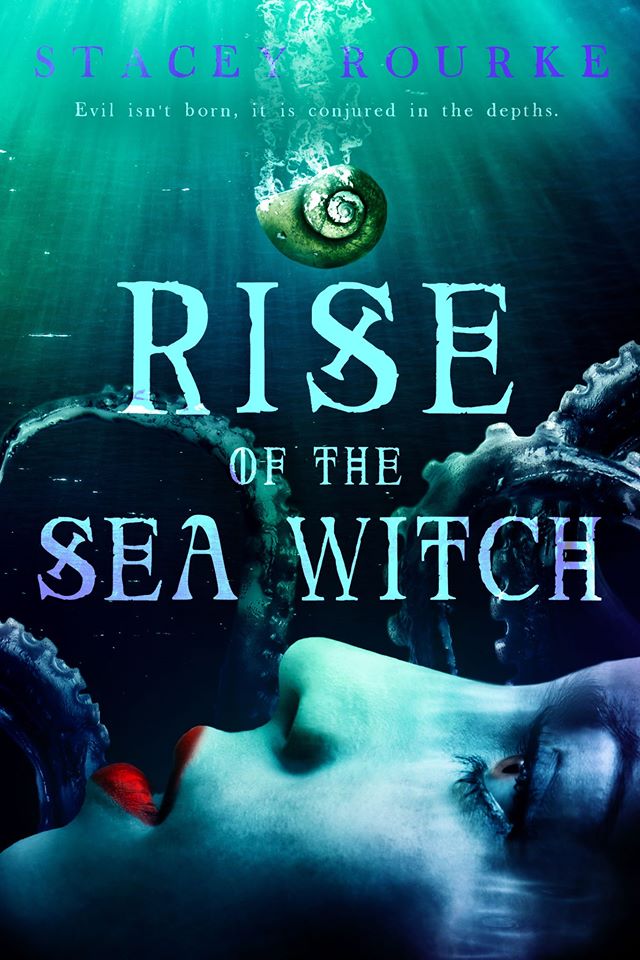
Rise of the Sea Witch ~ Stacey Rourke

Rise of the Sea Witch by Stacey Rourke

Details of the sea witch’s banishment have been exaggerated. The body count that preempted it was not. Once an illustrious princess, her hands and tentacles were stained with the blood of thousands. No one could comprehend how the hooks of madness dragged her down from her life of privilege. Born Princess Vanessa of Atlantica, the ambitious young royal was one of two children born to the great King Poseidon. She and her brother, Triton, were groomed from birth to rule. Yet only one would ascend that coveted throne. While carefree Triton flits through his training with a cavalier demeanor and beguiling charm, Vanessa’s hunger for her father’s acceptance drives her to push herself to the limits of magic, and combat to become a leader worthy of her people. When war against the humans ravages their once regal kingdom, political sides are chosen. Factions from the seven seas challenge the existing leadership, pitting Vanessa against her brother in a vicious battle for the crown. Traitors are exposed, dark family secrets revealed, and a once strong sibling bond is strained to its breaking point. Only when the ink black waters from the ultimate betrayal rescind, will the truth be known of how the villainous sea witch rose with one name on her vengeful lips–Triton.


BUY IT NOW ON AMAZON


Stacey Rourke

Stacey Rourke is the author of the award winning YA Gryphon Series, the chillingly suspenseful Legends Saga, and the romantic comedy Reel Romance Series. She lives in Michigan with her husband, two beautiful daughters, and two giant dogs. She loves to travel, has an unhealthy shoe addiction, and considers herself blessed to make a career out of talking to the imaginary people that live in her head.

Visit her at http://www.staceyrourke.com
Facebook at http://www.facebook.com/staceyrourkeauthor
or on Twitter or instagram at Rourkewrites.

Posted in book editor

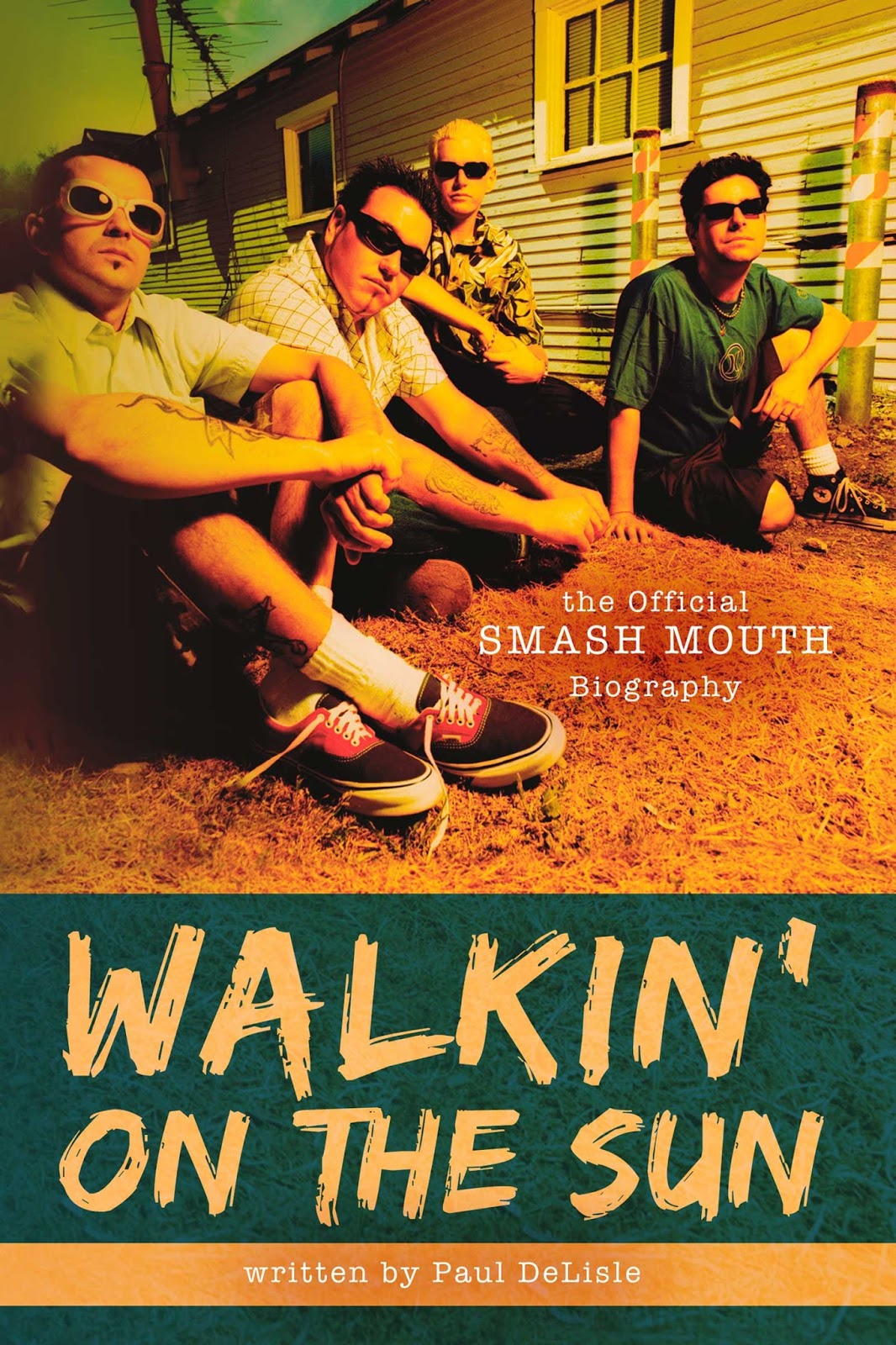
Smash Mouth Release

I could not be more excited to feature this new release! Who hasn’t rocked out to the music of Smash Mouth?! Now you can go behind the music with a band that carried the spirit of a generation in Walkin’ on the Sun; The Official Smash Mouth Biography.

Blurb:
Hello. My name is Paul DeLisle. I’m the guy who wrote this book. You’ve probably never heard of me. That’s okay. Most people wouldn’t know me from Adam. But, unless you’ve been living in a cloistered monastery for the last fifteen years, you have heard of my band.


So begins the memoir of the creation, rise, and current state of the multi-platinum recording artist Smash Mouth as told by bassist Paul DeLisle. Well known for their hits “All Star,” “Walking on the Sun,” “Then the Morning Comes,” “Can’t Get Enough of You Baby,” and “I’m a Believer,” the band carried the spirit of a generation, but didn’t stop there. Enjoy this behind-the-scenes look from Paul’s unique, there from the start, insider’s view.
Excerpt:
There’s an episode of Cheers where washed-up ball player Sam Malone, frustrated with either Diane or Rebecca, proclaims, “Y’know, most people don’t know this … but I’m famous!”
I love that line. I can totally relate. You see, I am a founding and continued member of the band Smash Mouth. Yet I am, proudly and alas, the bass player. I’m not famous. My band is.
From the beginning, Smash Mouth was set up as a democracy between four musicians and a manager, each player having an equal voice on band matters. Yet we were all fully aware and accepting of the fact that, as lead singer/frontman, Steve Harwell would be getting a disproportionate amount of attention. Seeing as he is the face and mouthpiece of Smash Mouth, you may be a little disappointed he didn’t write this book.
But stay with me here. Because as you’ll see, I have a unique vantage point: as one of only four original constituents, I’ve been involved in every aspect of the band since day one. Only Steve and I have trod every step of this Smash Mouth journey. Also, while traditionally under-recognized, the bass player himself sees everything. Plus I went to college. Who better to write a book about Smash Mouth?
That said, keep in mind this book is solely from my point of view. Steve, Greg, Kevin, and Robert would obviously have different takes on certain events. However, this book is simply intended as a comprehensive account of our rise to fame and continued success.
So without further ado … here’s what happened:
EEP!!! How awesome is that! Pick up your copy of Walkin’ on the Sun today and get your own “backstage pass” to the world of Smash Mouth!
Buy Links:
Brought to you by
Banner