Posted in authors, Books, indie authors, readers, writing

New Book Sneak Preview

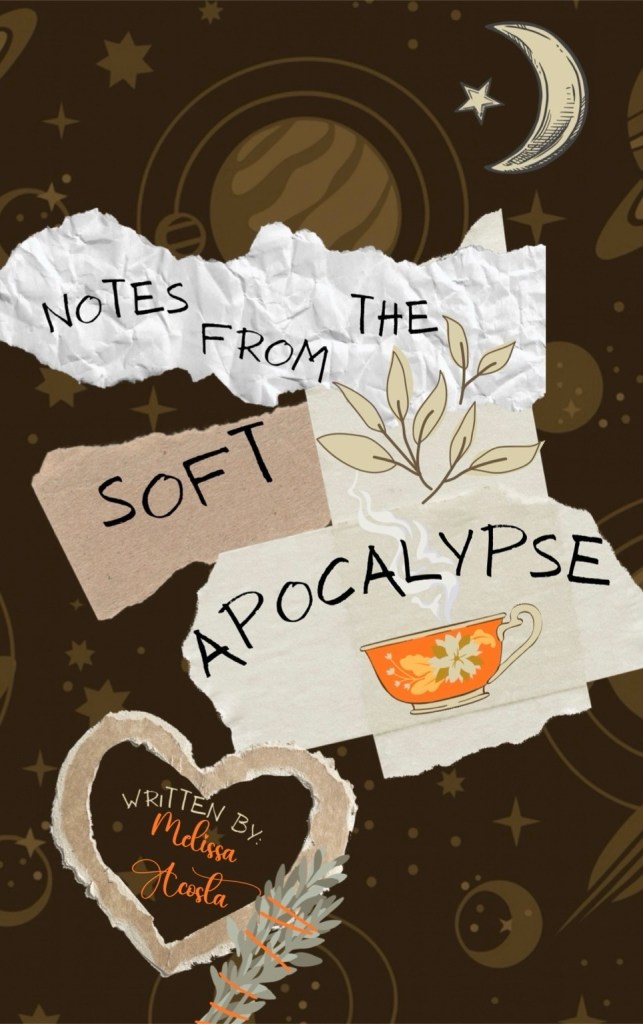
Here is an excerpt from my upcoming book (title TBD):

The Crumble

The world didn’t end all at once.

It ended in soft, sneaky ways. Like forgetting what joy felt like, or realizing the sound of notifications makes your chest hurt. It ended in late-night doomscrolls, in “I’m fine” texts sent with shaking thumbs, in the hollow calm of people pretending they’re not falling apart.

The apocalypse wasn’t fire and brimstone. It was burnout, wearing leggings and holding a coffee it didn’t even want anymore.

Somewhere between climate anxiety, capitalism, and “you just need to manifest harder,” we collectively short-circuited. And then we smiled for selfies. Because that’s what you do when the world feels like it’s collapsing … you pick a filter and pretend the lighting is just bad.

But under all the noise, something started to crack.

Not in a tragic way, more like an overdue shedding. Like a snake realizing its skin is too small, or a soul realizing it has outgrown its own performance.

The crumble isn’t destruction.

It’s awareness.

It’s the sacred, messy middle ground where everything fake stops fitting. Where you wake up one day and realize you can’t keep performing “fine” when you’re chronically exhausted from pretending you’re okay.

I used to think healing would look like glowing skin, tidy to-do lists, and morning meditations with lemon water. Turns out, it looks more like ugly crying in your car, canceling plans, deleting three-day-old texts you never sent, and relearning how to breathe without guilt.

The truth is, we were never built to live in permanent survival mode.

We were built to connect. To feel. To create beauty even when everything’s broken. So, when it all starts to crumble, let it.

Maybe that’s not the ending you feared. Perhaps it’s the beginning you needed.

You’re not falling apart. You’re composting.

And from that softness … new worlds grow.

Each short section with have workbook style questions with related quotes. Below is a sample:

The “Fine” Translator

Finish these like you’re texting your best friend:

When I say “I’m fine,” I usually mean: __________________________

The thing I’m pretending doesn’t bother me is: ______________________

If my body could text for me right now, it would say: _______________

Tiny rebellion (pick ONE)

Today I rebel by:

☐ turning off one notification

☐ drinking water like it’s a personality trait

☐ saying “no” without writing a novel as explanation

☐ doing the bare minimum… on purpose

☐ unfollowing one account that makes my brain feel like a broken dryer

☐ going outside for 3 minutes like a confused house cat

One sentence truth

The honest version of today is: ______________________________________

If this sounds interesting to you, follow along for more updates. And pick up You Were Never Broken today!

Posted in authors, book editor, writing

Why You Absolutely Need an Editor (Yes, Even You)

By someone who loves you enough to tell you the truth

Let’s just rip the Band-Aid off: every writer needs an editor. Yes, even the ones with degrees. Yes, even the ones who are editors themselves. And yes, even you, my talented, brilliant, spell-check-abusing friend.

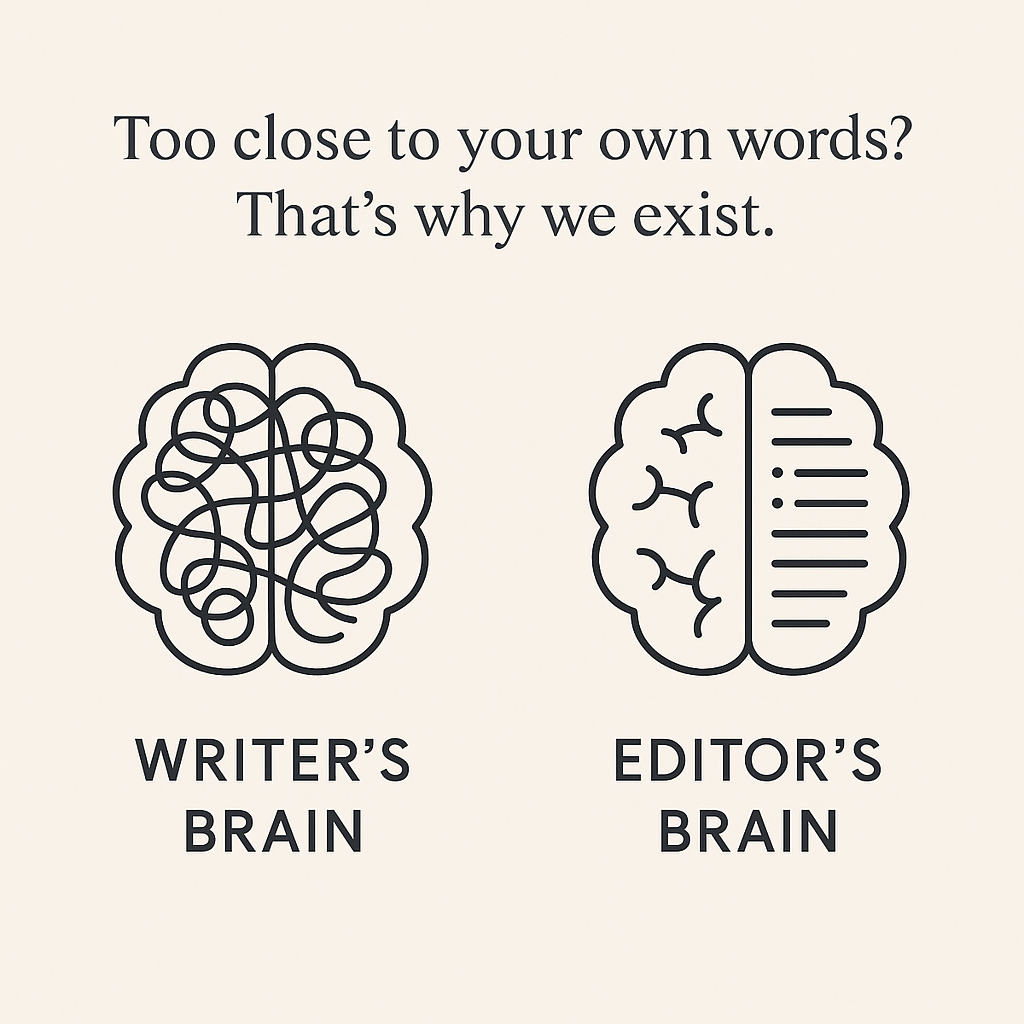
Here’s the thing: writing is emotional. It’s personal. It’s vulnerable. When you’re that close to your own words, it’s nearly impossible to spot the gaps, tangents, or scenes that only make sense in your head. That’s where an editor steps in … not to tear you down, but to build you up better.

Here’s what a good editor actually does:

Clarifies your message so your readers aren’t left saying, “Wait, what just happened?”

Catches errors your brain glosses over because it already knows what you meant (curse you, typo blindness).

Strengthens your voice without watering it down. A good editor doesn’t erase you—they amplify you.

Saves your credibility. No one wants their book baby published with homophone horror stories like “bare with me” instead of “bear with me.” (The trauma.)

Polishes your pacing, flow, and structure so your reader stays hooked, not confused or bored.

Editing isn’t about perfection, it’s about connection.

Your story might be raw, real, and powerful … but if it’s buried under clunky sentences, confusing transitions, or grammar glitches, your message gets lost. An editor helps bridge the gap between your ideas and your reader’s experience.

Because at the end of the day? It’s not about your ego. It’s about your impact.

Common excuses I hear (and lovingly demolish):

“But I’m good at grammar.” Cool! You’re still too close to your work to catch everything.

“I’ll just use AI.” AI is a tool. An editor is a human brain + a literary therapist + a plot surgeon. We see what a robot can’t.

“Editing is expensive.” So is reprinting your book with a typo on the first page.

The truth?

If you believe your words matter—if you care about your craft, your readers, and your reputation—you need an editor. Not because you’re not good enough. But because you’re too good to settle for less.

Want help making your words shine? I know a girl. Let’s turn your draft into something you’re proud to share with the world.

Posted in authors, book editor, indie authors, writing

You’re Not a Bad Writer, You Just Need a Good Editor

Let’s get one thing straight: needing an editor doesn’t mean your writing sucks.

It means you’re smart enough to know that your words deserve a second set of eyes, and that your story deserves to shine.

You didn’t pour your heart, soul, and late-night caffeine binges into your book just to second-guess every comma, right?

That’s where There for You Editing comes in.

📣 We’re not here to tear your voice apart.

We’re here to amplify it. To polish the magic you already made. To help your message hit harder, flow better, and sound exactly like you … only sharper.

Whether you’re a first-time author, a self-publishing badass, or a spicy content creator with too many tabs open and a looming deadline, we’ve got your back.

Because editing should feel like support, not shame.

We’re here to:

•Catch your sneaky grammar gremlins

•Strengthen your voice without stripping your style

•Help you say what you actually mean with confidence

•Remind you that you’re a damn good writer, full stop.

So if you’re tired of staring at your draft like it just personally offended you …

Let us help. Because your words matter.

And we’re There for You, every sentence of the way.

🖤 Learn more or book your edit at https://thereforyouediting.wordpress.com

🖊️ Follow us on Instagram @ThereForYouEditingServices

Posted in authors, book editor, indie authors

“Quiet Corners”

I miss you in the quiet corners—

not the loud ones full of tears,

but the soft, invisible spaces

I’ve learned to cry inside for years.

Like folding laundry in silence,

or standing in checkout lines,

or when someone says, “Tell me about him,”

and I just say, “He was kind.”

I carry your name like a whisper

stitched into my seams,

smiling when I speak of you,

but screaming in my dreams.

They think I’ve moved on,

because I laugh and get things done,

but I still flinch at father’s day cards

and pretend the grief weighs none.

You were my first safe place—

my compass, my home, my guide.

Now I pretend I’m fine

with a storm just under the tide.

So I miss you in the quiet corners,

where no one else can see—

grief is a ghost I dine with

while the world has coffee with me.

Posted in authors, book editor, writing

Why Authors Need to Be on Social Media (Even If It Feels Cringey)

Let’s be real: writing a book is hard. Publishing it? Even harder. But selling it in a world where everyone’s attention span is shorter than a TikTok? That’s a whole new beast.

So here’s the truth most authors don’t want to hear:

If you’re not showing up on social media, your book is missing out on the spotlight it deserves.

Before you panic-scroll away, take a breath. This isn’t about becoming an influencer. You don’t need to dance, lip-sync, or overshare your personal life (unless you want to … then by all means, bring the drama). But you do need to show up.

Here’s why social media matters for authors:

1. Visibility Is Everything

You could have written the next great literary masterpiece, but if no one knows it exists? Crickets. Social media helps your book be seen. It’s the digital equivalent of waving your book around in a crowded room and saying, “Hey, this might change your life.”

2. Readers Buy from People, Not Just Pages

People want to know the human behind the words. Posting on social media builds trust and connection. You’re not just a name on a cover—you’re someone they root for, laugh with, cry with, and buy from.

3. It’s Free Marketing (aka Budget-Friendly Brilliance)

No need to throw thousands at ads right out the gate. With consistent posting, smart captions, and a sprinkle of personality, you can build a loyal audience organically. Bonus points if you include cat pictures. Readers love cats.

4. It Keeps You Top of Mind

A one-time post doesn’t cut it. Regular posting reminds people, “Oh right, I’ve been meaning to buy that book!” Visibility breeds familiarity, and familiarity leads to sales.

5. It’s Where Your Readers Already Are

Whether they’re scrolling through BookTok, saving aesthetic Instagram posts, or lurking in Facebook book groups—your readers are online. Meet them where they are. Then blow their minds.

Okay, but what do I even post?

I got you. Try:

•Behind-the-scenes of your writing process (yes, even the messy parts)

•Quotes from your book

•Funny or relatable author struggles

•Fan reactions and reviews

•Aesthetic mood boards

•Personal insights (you’re more interesting than you think)

Final thought:

You don’t need to go viral to be successful. You just need to be present. Authenticity > perfection. Consistency > gimmicks. And yes, you can do this—awkward selfies, imposter syndrome and all.

So log in. Post the thing. Say hi.

Your readers are waiting.

Posted in authors, book editor, Books, indie authors, publishers, self-editing, writing

Character Traits Based On Their Zodiac Sign

Everyone talks about how their zodiac sign “makes” them. For instance, I’m a Taurus and always tell people that’s why I’m so stubborn. I’ve created a short description of each sign for you to use. Perhaps your next MC will be a stubborn editor!

Aries loves to be number one, so it’s no surprise that these audacious rams are the first sign of the zodiac. Bold and ambitious, Aries dives headfirst into even the most challenging situations.

Taurus is an earth sign represented by the bull. Like their celestial spirit animal, Taureans enjoy relaxing in serene, bucolic environments, surrounded by soft sounds, soothing aromas, and succulent flavors.

•Have you ever been so busy that you wished you could clone yourself just to get everything done? That’s the Gemini experience in a nutshell. Appropriately symbolized by the celestial twins, this air sign was interested in so many pursuits that it had to double itself.

Cancer is a cardinal water sign. Represented by the crab, this oceanic crustacean seamlessly weaves between the sea and shore, representing Cancer’s ability to exist in both emotional and material realms. Cancers are highly intuitive, and their psychic abilities manifest in tangible spaces: For instance, Cancers can effortlessly pick up the energies of a room.

•Roll out the red carpet, because Leo has arrived. Leo is represented by the lion, and these spirited fire signs are the kings and queens of the celestial jungle. They’re delighted to embrace their royal status: Vivacious, theatrical, and passionate, Leos love to bask in the spotlight and celebrate themselves.

Virgo is an earth sign historically represented by the goddess of wheat and agriculture, an association that speaks to Virgo’s deep-rooted presence in the material world. Virgos are logical, practical, and systematic in their approach to life. This earth sign is a perfectionist at heart and isn’t afraid to improve skills through diligent and consistent practice.

Libra is an air sign represented by the scales (interestingly, the only inanimate object of the zodiac), an association that reflects Libra’s fixation on balance and harmony. Libra is obsessed with symmetry and strives to create equilibrium in all areas of life.

Scorpio is one of the most misunderstood signs of the zodiac. Because of its incredible passion and power, Scorpio is often mistaken for a fire sign. In fact, Scorpio is a water sign that derives its strength from the psychic, emotional realm.

•Represented by the archer, Sagittarians are always on a quest for knowledge. The last fire sign of the zodiac, Sagittarius launches its many pursuits like blazing arrows, chasing after geographical, intellectual, and spiritual adventures.

•The last earth sign of the zodiac, Capricorn is represented by the sea goat, a mythological creature with the body of a goat and tail of a fish. Accordingly, Capricorns are skilled at navigating both the material and emotional realms.

Posted in authors, book editor, Books, indie authors, publishers, self-editing, writing

Character Actions: The Building Blocks for Emotional Complexity

Every action has a purpose

1. To create suspense

Otis did not back down. He stepped forward, a twig cracking under his shoe. A cricket chirped. He aimed the gun at Nicolas. Sweat trickled down Otis’s forehead, burning his eyes. Otis clicked the trigger.

Previously, this paragraph began with the sentence, “Otis clicked the trigger.” None of the sentences building up to this moment were there, and with no buildup, there’s no suspense.

2. To emphasize a point made in dialogue

Ed lunged at Otis, snatching the gun from his hand.

“Gotcha!” he said, mirthfully waving the gun. “Now we have knives and a gun. And we’re bigger.” He flexed his bicep. “Guess who’s gonna win.”

Although flexing is a pretty obvious display of someone’s strength and size, the action highlights Ed’s obnoxiousness and leads readers to dislike him even more.

3. To add tension between a character’s words and emotions

“Not even how you used to spend your Friday nights?” The hint of a smile formed in the corners of Mrs. Thompkin’s lips.

“I don’t know what you’re talking about,” Shelly said, rubbing the back of her neck.

Although Shelly claims innocence, her nervous gesture implies that she’s hiding something.

Picture the scene as a movie in your mind

When you’re writing a scene, you’re painting a picture for the reader. Before you can accomplish this, though, the picture must be clear in your own mind.

Imagine each scene playing out in your head. Visualize the setting. Where would the character be standing right now? Where is he in relation to the other characters? Are they crammed together in a tiny room, or are they scattered about in an auditorium?

Thinking about scenes in these terms help to simplify the process of creating more believable characters and situations.

Revealing a character’s emotions through action need not be viewed as some mystical process but can be as simple as checking items off a list:

•What are others’ perceptions of this character?

•What is the character thinking and feeling?

•How is the character interacting with his/her space?

•What is the character physically doing (or not doing) at this moment?

•How are others reacting to this character’s words and behavior?

•How is the character trying to hide his/her emotions?

Conclusion

“Show don’t tell” is a rule we’ve all heard a million times and grasp intuitively, but it can be hard to pull off, especially in longer works where we’re juggling plot, dialogue, etc.

Luckily, just as the five senses can be utilized to create more dynamic descriptions, character actions are the building blocks for richer characters with complex emotions. Although the process of developing these characters is a straightforward one, the end result will be organic characters that stay with the reader long after the story is over.

Reblogged from: here

Posted in authors, book editor, Books, indie authors, publishers, readers, self-editing, writing

The Best Books on Writing According to Random House

Writing is, as a general rule, hard. Defining yourself as a writer can be even harder. Sure, there are other difficult practices like law and medicine out there, but a person becomes a lawyer or a doctor when he or she passes a series of exams and graduates from a certain school. Writing doesn’t always work that way. There aren’t tests to study for and facts to memorize. Where are we supposed to learn how to write? From grammar rules to publishing advice to personal narratives, these books on writing reveal in intimate detail the ins and outs of what it means to call yourself a writer. Sometimes harsh, sometimes funny, but always honest, they can be thought of as a kind of syllabus for writing. Whether you’re an aspiring artist working on your first drafts or a seasoned veteran in the publishing world, these are some of the best books on writing with insight and wisdom that can support you at all stages of your writing process.

Dreyer’s English by Benjamin Dreyer

As Random House’s copy chief, Dreyer has upheld the standards of the legendary publisher for more than two decades. He is beloved by authors and editors alike—not to mention his followers on social media—for deconstructing the English language with playful erudition. Now he distills everything he has learned from the myriad books he has copyedited and overseen into a useful guide not just for writers but for everyone who wants to put their best prose foot forward.

Purchase here: Amazon

The Forest for the Trees (Revised and Updated) by Betsy Lerner

For both established and prospective authors alike, the publishing house can seem like a jungle. Luckily, Betsy Lerner is here to lead a safari, citing her vast collection of experiences as an editor as her field guide. The Forest for the Trees motivates writers by helping them get over their fear of the unknown. It’s less about taming the wilderness and more about facing the demons of self-doubt and sloth that live in every person’s own mind.

Purchase here: Amazon

The Elements of Style Illustrated by William Strunk, Jr. and E. B. White

William Strunk and E.B. White’s The Elements of Style is so widely known that we’re sure you already have a copy, but of course we had to mention it. The only style guide to ever appear on a bestseller list, this book should be your go-to if your writing is in need of an infusion of clarity. Plus, this particular edition is illustrated by Maira Kalman, adding a visual element of style to the classic.

Purchase here: Amazon

Naked, Drunk, and Writing by Adair Lara

Adair Lara’s Naked, Drunk, and Writing is a must-read for any memoirist or personal essayist. With experience as a teacher, editor, and, of course, writer, Lara’s know-how will help readers through problems like how to face your family after they’ve read your work and how to find an agent who will fight for you. The perfect mix of tough love, comic relief, and passion, Lara’s book is invaluable for anyone who needs a little help telling their story.

Purchase here: Amazon

Bird by Bird by Anne Lamott

Anne Lamott knows from writing. She’s the author of seven novels (with one on the way) and nine works of nonfiction — many of them bestsellers. In Bird by Bird, her 1994-published book on the craft of writing, Lamott addresses how to get started, accepting the shittiness of a first draft, writing groups, writer’s block, how to know when you’re done and more. Her words, advice, insight are priceless.

Purchase here: Amazon

Poemcrazy by Susan G. Wooldridge

Though some may be able to simply sit back and pull a poem from thin air, that’s not the case for most. Writing workshop leader Susan G. Wooldridge taps into her own experience writing and helping others write to share this compilation of prompts, ideas, and more. Poemcrazy is a guide that any budding poet will find valuable.

Purchase here: Amazon

Walking on Water by Madeleine L’Engle

Madeleine L’Engle has mastered the art of weaving faith into fiction. In Walking on Water, the late author explores what it means to be a Christian artist, and touches on the influence of science on her writerly life. This is, truly, a book that will hold appeal for writers and readers alike, as it sheds light upon the mind of one of this last century’s most talented writers.

Purchase here: Amazon

Story Genius by Lisa Cron

So much of writing is creativity. But let’s not forget about the scientific piece of the puzzle. In her new book, Story Genius, story coach Lisa Cron addresses just that, examining the role that cognitive storytelling strategies can play in writing — and how you can put them to work for yourself.

Purchase here: Amazon

Posted in authors, book editor, Books, indie authors, publishers, self-editing, writing

9 Self Editing Tips

1. GIVE THE DRAFT A CHANCE

Write freely and unchecked. Tempted as you may be to go back and start editing what you just wrote—or even what you wrote yesterday—don’t! Not only do you not have the emotional distance, if you start editing yourself and judging the quality of your work, your creativity is sure to get squandered.

2. GIVE YOURSELF A BREAK

After you finish your manuscript, don’t immediately start editing.

Give yourself distance from your writing. Do something completely different to change your frame of mind, such as go on vacation. It’s also a good idea to immerse yourself in other forms of creativity. Other forms of art can help inspire your own.

3. TACKLE YOUR EDITING ONE TYPE AT A TIME

Once you’re back from a break and you’re ready to tackle your edit, break your editing into categories.

Typos – Check for spelling, grammar, and awkward phrasing.

Plot – Verify that all questions posed in your story have been answered.

Pacing – Check that there are not parts of your story that drag it down and feel out of pace.

Characters – Give every character a purpose. Are they believable? Do they have a completed arch?

Scenes – If the scene isn’t developing a plot or character, it needs to be axed.

4. READ IT ALOUD

By reading your manuscript aloud, you’ll inevitably catch some spelling and grammar problems. One of the best reasons to read aloud is to check for pacing and tone. Sometimes you can auto-correct when you are reading silently, but reading your manuscript in your own voice at a normal speed will help you catch errors you weren’t able to detect before.

If you don’t want to read your entire manuscript aloud, consider using a text to speech reader instead. This way you can listen for errors and unnatural pacing with ease.

5. GIVE YOUR MANUSCRIPT TO SOMEONE ELSE TO READ

You (or an app) can’t be the only one to read your manuscript during the editing process. You should definitely give it to a trusted friend or family member to get an outside opinion on coherency, flow, and character cohesion.

Give them permission to tear it apart piece by piece. They won’t want to do it, so insist. You have final say in the editing process; however, another perspective should always be welcome.

6. CONSIDER EDITING AWAY FROM YOUR COMPUTER

Instead of editing on your computer, why not edit in a completely different place than your creative zone?

Print off your manuscript, then take the printout with a red pen and head to your most comfortable chair. You may find that editing in a new place will help to change your mindframe.

7. TURN ON SPELL CHECK

A lot of writers prefer to write with spell check off as a way to tamp down that editor voice that can sometimes creep in and sideline your creativity. However, in editing mode, turn the spell check back on.

Those red squiggly lines are painful but a necessary part of the editing process. You need to address those before getting into the real meat of your editing process.

8. TARGET REPETITIVE WORDS

Do you have words that you repeat over and over again? If you’re a writer, the answer is yes. We all go through periods where we’re addicted to one word or phrase, which you’ll find used over and over again in your manuscript.

It may not stand out to you, but it will stand out to your readers. So, you owe it to them to search and destroy needless repetition in your manuscript.

The good news is that it’s easy to find your most repeated words and phrases.

9. DELETE EXTRA WORDS

You really need to get rid of any excess words that don’t move the story forward. If you’re not careful, you can slow down a story by being too descriptive. If the word, sentence, paragraph, or even chapter weighs down the pace of the story, don’t be afraid to cut it.

And when all of your self-editing is done, you can reach us HERE to get more information on having your manuscript professionally edited.

Article re-blogged from nybookeditors.com
Posted in authors, Books, readers, writing

Questions to Ask While Editing Your Manuscript

Questions to Ask While Editing Your Manuscript

Questions to Ask About Character Development

● Does every character have a strength?

● Does every character have a weakness?

● Have you properly arched all characters?

● Does the antagonist have motivation?

● Does the protagonist have motivation?

● Are there any unnecessary characters?

● Can you combine any two characters into one?

Questions to Ask About Scenes

● Does every scene move the story forward?

● How do the characters interact with the scene?

● Does the scene fit the genre?

● Does the scene fit the time period?

● Have you added too many details and weighed down the story?

Questions to Ask About Word Choices and Phrasing

● Have you chosen the right words to describe each scene?

● Have you eliminated weak words and phrasing?

● Have you cut out adverbs?

● Have you embraced active voice?

Questions to Ask About Plot, Pacing and Tension

● Is the plot engaging?

● Is the plot logical?

● Are all issues resolved?

● Does the plot make sense?

● Is there a hook?

● Is the plot focused?

● Are there surprises in the plot?

● Is the ending inevitable or in some way boring?

● Is there a climax?

● Is there a struggle? Is there tension?

● Have you addressed the conflict within each character?

● Have you identified how the characters struggle with each other?

Questions to Ask About Point of View

● Is the point of view clear throughout the story?

● Does the point of view shift around within a scene? A chapter?

For more information, visit: There for You Editing’s Facebook Page